by Mark Preston | May 18, 2024 | Golf Equipment & Products - Reviews, Articles & Guides
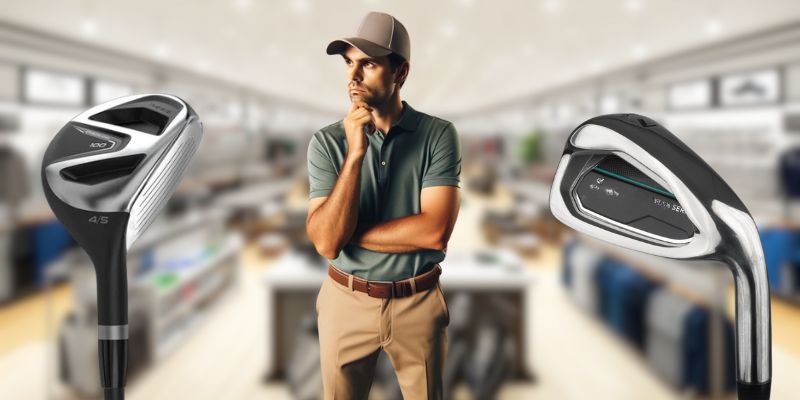
Hybrid vs. Iron is a common dilemma faced by many golfers, whether they’re beginners or seasoned pros.
The choice between these two types of golf clubs is pivotal because it can significantly influence your game style and performance on the course.
This article delves into the strengths and uses of each, helping you make an informed decision tailored to your needs.
Benefits of Hybrids
The hybrid vs. iron debate often tilts in favor of hybrids when it comes to versatility and ease of use.
Hybrids are designed to combine the best features of irons and fairway woods, making them easier to hit than traditional long irons.
They are especially beneficial for golfers who struggle with higher irons due to their larger, more forgiving club heads and better weight distribution.
Hybrids can be a game-changer for achieving greater distances without sacrificing accuracy, making them a popular choice in rougher conditions or when tackling longer approach shots.
When Irons Perform Better
Despite the rising popularity of hybrids, there are scenarios where golf irons perform better in the hybrid vs. iron comparison.
Irons offer superior control and a lower trajectory, which can be advantageous on windy days or when playing on a course with a lot of hazards close to the greens.
For skilled golfers, irons provide the ability to shape shots more effectively, allowing for draws and fades that can navigate tight fairways or approach angles more precisely.
Ideal Situations for Each
In deciding hybrid vs. iron, consider the typical courses you play and your specific golfing challenges.
Hybrids excel in long-distance scenarios where you might typically struggle with a long iron.
They’re also ideal for players who need help with softer landings on the green due to their higher loft angles.
Conversely, irons should be your go-to when precision is paramount, particularly in close-range shots where you need to manage the ball’s spin and trajectory meticulously.
Choosing between hybrid vs. iron depends on your specific golfing needs and the conditions you typically play in.
Each type of club offers unique benefits, and the best choice often involves having both in your golf bag to maximize your performance across different situations.
Whether as a personal upgrade or a thoughtful gift, selecting the right golf clubs can elevate the enjoyment and effectiveness of every round.
Can hybrids replace all my irons?
While hybrids are versatile, they are generally used to replace long irons. Most golfers will benefit from a mix of hybrids and irons in their bags to cover all possible scenarios on the course.
How do I know if I should switch to a hybrid?
Consider switching to a hybrid if you consistently struggle with long irons or need more forgiveness and higher launch angles in your long game. Testing both on a course or a simulator can also help determine which better suits your play style.
Are hybrids more expensive than irons?
The price can vary depending on the brand and model, but hybrids and irons are generally comparable in cost. Investing in a hybrid can be cost-effective if it improves your performance and reduces the need for multiple specialized irons.
by Mark Preston | May 18, 2024 | Golf Equipment & Products - Reviews, Articles & Guides
Improving golf score with the right irons isn’t just about lowering your handicap; it’s about enhancing your overall play by choosing golf clubs that complement your style and strengths.
This approach helps refine your technique, leading to more consistent and accurate shots.
Iron Selection Strategy
Selecting the right irons is crucial in improving your golf score with the right irons whether you are a high handicapper or a low handicapper.
Golfers should focus on a combination of club head design, shaft material, and overall feel.
For beginners, irons that offer a larger sweet spot and more forgiveness can help mitigate the effects of imperfect swings.
Intermediate and advanced players might opt for irons that offer more control and feedback, enhancing their ability to shape shots and control trajectory.
It’s essential to match the iron type to your playing style.
Those who struggle with long irons may benefit from hybrids, which can replace harder-to-hit long irons, offering better loft and distance control.
Scoring Clubs Tips
Improving golf score with the right irons also involves mastering your scoring clubs, particularly the short irons and wedges.
These clubs are your main tools once you are within striking distance of the green and accuracy becomes paramount.
Focus on clubs that allow for precision. This means looking at loft angles that suit your typical play environments and swing speeds.
A common mistake is selecting irons based solely on what professional players use, rather than what fits one’s specific needs and skills.
Equipment Upgrades
Consider upgrading your equipment periodically. Technology in golf irons is constantly advancing, with improvements that can significantly affect ball speed, trajectory, spin, and overall control.
Improving golf score with the right irons might mean investing in newer models that incorporate the latest advancements in materials and aerodynamics.
When upgrading, don’t just focus on brands; focus on what enhancements the equipment can bring to your game.
For instance, some modern irons feature technologies that lower the center of gravity, aiding in easier launch and better control.
In conclusion, improving golf score with the right irons requires careful selection based on personal skill level, playing style, and current technology.
With the right irons in your bag, every round can become an opportunity to enhance your performance and enjoy the game even more.
Perfect for any golfer, investing in the right irons could be the best gift that keeps on giving, round after round.
How often should I replace my golf irons to keep improving my score?
Generally, consider upgrading your golf irons every 4-5 years to benefit from technological advances. However, if there is noticeable wear or if your playing style has significantly changed, you might consider doing so earlier.
Can the right irons really make a noticeable difference in my scoring?
Absolutely! The right irons can improve your control and consistency, which are crucial for lowering your scores, especially on approach shots.
Should I get custom-fitted for my golf irons?
Yes, custom fitting is highly recommended because it ensures that your clubs are tailored to your specific body measurements and swing style, which is critical for improving golf score with the right irons.
by Mark Preston | May 18, 2024 | Golf Equipment & Products - Reviews, Articles & Guides
Introduction: Choosing the Right Golf Irons – Forged vs. Cast
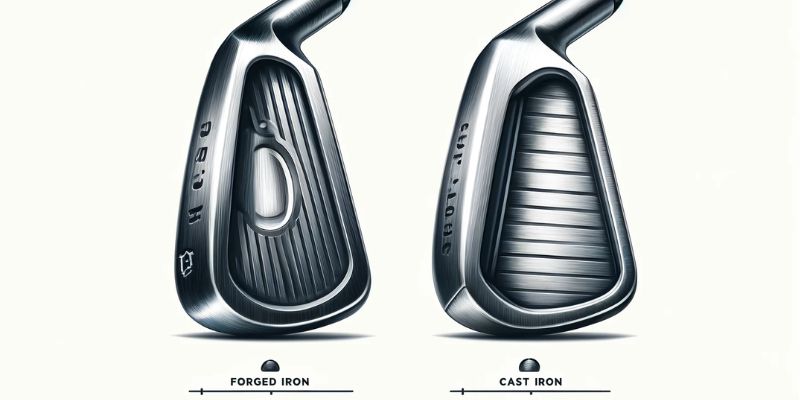
Forged vs. cast irons, selecting the right golf irons is crucial for any golfer looking to optimize their game. The type of irons you choose can significantly impact your play, influencing everything from the feel of the shot to the control and forgiveness of the golf club. Understanding the differences between forged and cast irons is essential in making an informed decision that aligns with your personal playing style and needs.
Forged Irons:
Forged irons are crafted through a process of heating and hammering a single piece of metal into shape. This traditional method of manufacturing golf irons is highly valued for its ability to produce clubs with a softer feel, which many skilled golfers prefer for the precise feedback it provides on each shot. Forged irons are often associated with a higher degree of control and a greater ability to shape shots, making them a favored choice among more experienced players.
Cast Irons:
In contrast, cast irons are made by pouring molten metal into molds. This method allows for more complex head designs and the integration of various materials within the head itself. Cast irons are generally easier to manufacture and allow for a wider range of features, such as perimeter weighting, which enhances forgiveness on off-center hits. This makes cast irons particularly appealing to beginners and intermediate players who benefit from the extra forgiveness that these irons provide.
Choosing between forged and cast irons depends largely on what you value most in your golf game. Whether it’s the unparalleled feel and control offered by forged irons or the enhanced forgiveness and versatility of cast irons, understanding these fundamental differences is the first step in selecting the ideal set of clubs for your game.
Definition and Manufacturing Process
Forged Irons:
Forged irons are created using a process that dates back to ancient blacksmithing techniques. The process begins with a solid piece of soft carbon steel which is heated to high temperatures. The hot metal is then hammered or stamped in a press into the desired shape of an iron head. This method compresses the steel, creating a tight, uniform grain structure that enhances the metal’s purity and density. The result is a club that offers superior feel and consistency. Because of the intense labor and precision involved, forged irons are often considered premium offerings in the golf world.
Cast Irons:
In contrast to forging, casting involves pouring molten metal into a pre-formed mold to achieve the desired club shape. This process allows for the incorporation of multiple materials and the creation of more complex head designs which are difficult to achieve with forging. Casting is highly efficient for mass production, making it a cost-effective method. The ability to integrate various technologies and materials also means that cast irons can offer a wide range of features, such as cavity backs and perimeter weighting, which enhance forgiveness and launch characteristics.
Characteristics of Forged and Cast Irons
Forged Irons:
- Feel: Forged irons are highly prized for their exceptional feel. The dense metal transmits vibrations from the clubface to the player’s hands more effectively, providing vital feedback about each shot. This can help skilled players make subtle adjustments to improve their game.
- Weight: Forged irons typically have a more concentrated weight distribution. This can be beneficial for players looking to shape their shots, as it provides greater control over ball trajectory and spin.
- Design Flexibility: While traditionally less versatile in design than cast irons, modern technological advances have allowed for more design options in forged irons, including cavity back designs that offer a blend of feel and forgiveness.
Cast Irons:
- Feel: Cast irons generally have a firmer feel compared to forged irons, which some players may find less responsive. This is due to the larger and more dispersed grain structure from the casting process.
- Weight: Thanks to the casting process, these irons can feature more intricate weight distribution, such as perimeter weighting. This design helps lower the center of gravity and makes the clubs more forgiving, ideal for mid to high handicappers.
- Design Flexibility: Cast irons excel in design flexibility. The casting process allows for the incorporation of multiple materials and innovative designs, such as undercut cavities and wider soles, which can help improve the overall playability for a variety of golfers.
Understanding these differences of forged vs. cast irons can help golfers choose between forged and cast irons based on their specific game requirements and what they value most in terms of performance, feel, and design. Whether you prioritize the unrivaled feel and control of forged irons or the forgiveness and technological advantages of cast irons, knowing these key characteristics will guide you in selecting the perfect set for your style of play.
Performance Factors Between Forged vs. Cast
Feel and Control:
- Forged Irons: Forged irons are celebrated for their exceptional feel and precise control. The denser material of a forged iron transmits vibrations from the clubface to the player’s hands more clearly, providing a soft, responsive feel. This feedback is invaluable for skilled players as it helps them discern even slight variations in their swing or contact with the ball. Moreover, the weight distribution in forged irons typically enhances control, allowing players to shape their shots and manage trajectories effectively.
- Cast Irons: Cast irons, while often not matching the soft feel of forged irons, have improved significantly with modern technologies. They tend to feel firmer and provide less feedback, which may be less favorable for players who rely heavily on feel to refine their game. However, their design flexibility allows for features that can compensate for swing imperfections, thereby providing a different type of control that focuses more on consistency and ease of play rather than nuanced feedback.
Forgiveness:
- Forged Irons: Traditionally, forged irons are less forgiving than their cast counterparts. They require more precise ball striking, as the concentrated weight can lead to greater penalties for mishits. However, advancements in design such as cavity-backed forged irons have started to bridge this gap, offering a blend of classic feel with increased forgiveness.
- Cast Irons: The casting process permits the integration of complex designs like perimeter weighting and larger sweet spots, which significantly enhance forgiveness. These features help stabilize the club at impact on off-center hits, making cast irons a favorable option for beginners and intermediate players who benefit from the extra help in maintaining shot consistency and distance.
Advantages and Disadvantages Of Forged vs. Cast
Forged Irons:
- Advantages:
- Superior feel and detailed feedback that assists in fine-tuning swing techniques and shot precision.
- Enhanced control over shot shaping and trajectory, appealing to low-handicap and skilled golfers.
- Disadvantages:
- Generally less forgiving, demanding more accurate ball striking.
- Often more expensive due to the labor-intensive manufacturing process.
Cast Irons:
- Advantages:
- Greater forgiveness makes them accessible and beneficial for high-handicap and beginner golfers.
- Typically more affordable and available in a wider variety of designs due to easier manufacturing.
- Innovative features like hybrid designs and wide soles can improve performance from various lies.
- Disadvantages:
- The firmer feel and less feedback may not appeal to players who rely on sensory information to improve their game.
- Might not offer the same level of control for shot shaping and precision as forged irons.
Choosing between forged vs. cast irons depends largely on a golfer’s skill level, style of play, and personal preferences. Players who value precision and feedback to refine their skills may prefer forged irons for their superior feel and control. In contrast, those looking for ease of use and forgiveness to enhance their confidence and consistency might find cast irons more suited to their needs. Understanding these differences allows golfers to make an informed choice that aligns with their game aspirations and challenges on the course.
Who Should Use Which?
Skilled Players and Senior Golfers: Golfers who have honed their skills over the years, including seniors who maintain a refined technique, often prefer forged irons. These players, experienced and advanced in their game, value the superior feel and precision forged irons offer. This type of iron aids in controlling shot shape, trajectory, and landing, crucial for nuanced adjustments that enhance performance. The tactile feedback from forged irons is particularly beneficial for seasoned players, including seniors, enabling them to fine-tune their shots effectively.
Beginners and High Handicappers: Cast irons are generally more suitable for beginners and those who play less frequently, including senior newcomers to the game. These irons are designed with features like wider soles and perimeter weighting to minimize the effects of off-center hits. This design makes them more forgiving and easier to handle, leading to a more enjoyable and less frustrating experience for players still working on perfecting their swing. This forgiveness is especially beneficial for high handicappers and novice senior players who are developing their skill.
Playing Conditions:
- Soft, Lush Courses: On courses with soft ground conditions, where the ball often sits down in the grass, the additional bounce and wider soles of cast irons can prevent excessive digging, making them more effective in these conditions.
- Hard, Fast Courses: Forged irons, with their greater control and lower trajectory options, might be more beneficial on firm, fast courses. Their ability to provide precise shot-making allows skilled golfers to better manage the firmer greens and tighter landing areas often found in such conditions.
Technological Advancements Of Forged And Cast Irons
Recent innovations in golf iron technology have significantly enhanced the performance characteristics of both forged and cast irons:
- Multi-Material Construction: Modern forged irons now often incorporate multi-material designs, where manufacturers use different metals or composite materials in the head to optimize performance. This can include tungsten inserts to increase perimeter weighting and improve forgiveness.
- Face-Insert Technologies: Cast irons frequently feature innovative face-insert technologies that expand the sweet spot and promote greater ball speed across a larger area of the face. This technology helps to maximize distance and forgiveness, appealing to a wider range of golfers.
Cost Comparison
The cost of golf irons can vary widely based on the manufacturing process, materials used, and brand reputation:
- Forged Irons: Typically, forged irons are more expensive than cast irons. The forging process is labor-intensive and requires high-grade materials, which increases the overall cost of production. Additionally, forged irons are often marketed towards the premium segment of golfers who are willing to pay more for the enhanced feel and performance.
- Cast Irons: Due to their less labor-intensive manufacturing process and the ability to use a variety of materials in the casting process, cast irons are generally more cost-effective. This makes them a popular choice among casual golfers and beginners who are looking for quality performance without the high price tag.
Choosing between forged and cast irons should be a decision informed by a golfer’s skill level, typical playing conditions, and budget. While skilled players might lean towards the refined qualities of forged irons, beginners and those who play less frequently may find the forgiving nature and lower cost of cast irons more appealing. With ongoing advancements in golf technology, both types of irons continue to evolve, providing golfers of all levels with better tools to enhance their game.
How to Choose
When it comes to choosing between forged vs. cast irons, the decision should align with your specific needs, abilities, and conditions under which you typically play. Here are some practical tips to help you make the best choice:
- Assess Your Skill Level: Consider your current skill level and your aspirations in the game. If you’re a skilled player with good control over your shots, forged irons might enhance your ability to shape shots and control trajectories. If you are a beginner or struggle with consistency, cast irons could offer the forgiveness that helps improve your game.
- Try Before You Buy: Testing different irons at a golf fitting center is one of the most effective ways to understand what works best for you. Hit several shots with both forged and cast irons to feel the difference in feedback, control, and forgiveness.
- Consult a Professional: A professional fitting provides valuable insights into the best type of irons for your game. Fitters consider various factors, including swing speed, attack angle, and typical miss-hits, to recommend the most suitable clubs.
- Consider Typical Playing Conditions: Reflect on the courses you most frequently play. Are they often wet and lush or dry and firm? Choose the type of iron that performs best under those conditions. For instance, cast irons with wider soles and more bounce are generally better for softer conditions.
- Factor in Personal Preferences: Ultimately, the right irons should feel good in your hands and instill confidence at each shot. Consider aspects like the look of the club at address, the feel of the club during the swing, and the sound at impact, which can all influence your comfort and performance.
Conclusion
Choosing between forged vs. cast irons, is a crucial decision that can significantly impact your performance on the course. Forged irons offer superior feel and control, making them ideal for experienced players who value precision and the ability to shape shots. Cast irons, on the other hand, provide increased forgiveness and are typically more suitable for beginners and players who benefit from a bit more help on off-center hits.
As you consider your options to put in your golf bag, weigh your skill level, the typical conditions of the courses you play, and your personal preferences. Trying different irons and consulting with a fitting professional can greatly assist in this decision, ensuring you select irons that complement and enhance your playing style.
Embrace the process of selecting your irons as an opportunity to invest in your golf game. The right choice will not only improve your performance but also increase your enjoyment of the game, encouraging continued improvement and success on the course.
by Mark Preston | May 17, 2024 | Golf Equipment & Products - Reviews, Articles & Guides
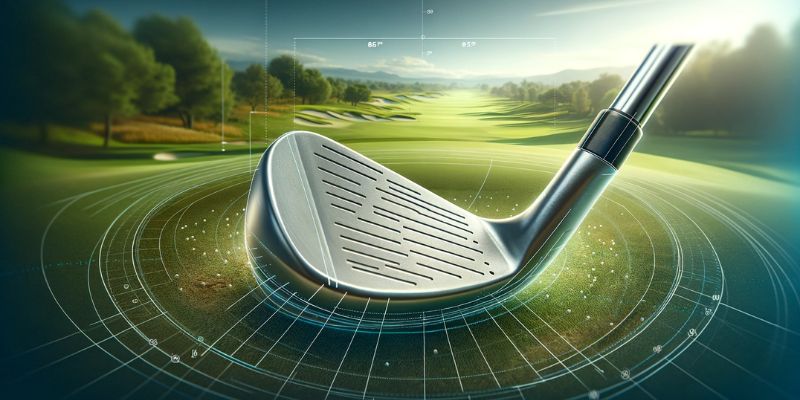
Understanding iron lofts is crucial for any golfer aiming to maximize their performance on the course.
Whether you’re a seasoned pro or a casual weekend player, getting to grips with the lofts of your irons can significantly influence your shot-making capabilities and overall game strategy.
Standard vs. Progressive Lofts
Iron lofts vary significantly between standard and progressive sets, impacting how golfers approach their game.
Standard lofts are typically seen in traditional iron sets where each iron progresses naturally in loft angle, offering a uniform step between clubs.
This setup is ideal for players who value consistency and have a well-rounded mastery of various shots.
On the other hand, progressive lofts, often found in modern iron sets, are designed to optimize performance by reducing the loft incrementally.
This design aims to maximize distance with the lower irons and provide greater control and accuracy with higher-numbered irons.
Understanding the distinction between these types can help you choose a set that complements your playing style and enhances your strengths on the course.
 Loft Gapping Importance
Mastering the art of loft gapping is essential for every golfer aiming to fine-tune their game.
Loft gapping, simply put, is the strategic spacing of degrees between each club in your golf bag, ensuring that every iron and wedge has a designated and effective role.
With ideal loft gapping, you unlock the potential for seamless distance control, allowing for precise, predictable shots that cover every necessary yardage on the course.
This meticulous arrangement prevents the dilemma of having gaps that are either too wide, leaving you without the right tools for specific distances, or too narrow, leading to the inefficiency of carrying overlapping clubs.
To truly harness the benefits of loft gapping, it’s advisable to consult with a golf professional who can assess your swing speed and examine your current set of clubs.
This tailored evaluation helps pinpoint whether your clubs adhere to optimal loft gapping standards and identifies any necessary adjustments to elevate your performance.
Through professional guidance, you can ensure that each club in your bag precisely matches your playing style and capabilities, thus enhancing your overall strategy and effectiveness on the course.
Adjusting Your Set
Fine-tuning your iron lofts can be a transformative strategy for any golfer.
Modern golf clubs often feature adjustable lofts, providing players with the flexibility to customize their golf clubs according to the demands of different courses or shifts in their swing mechanics.
For example, when facing longer par 3s, reducing the loft on an iron can help you achieve that crucial extra distance.
Understanding and adjusting your iron lofts allows you to optimize each club for peak performance, ensuring you are always equipped to make the best shot possible.
A well-adjusted loft not only improves your game but can also transform a good shot into an exceptional one.
Here’s a quick reference table of standard lofts for each iron, which can guide you in making precise adjustments to suit your needs:
| Iron Number |
Standard Loft (Degrees) |
| 2 |
18 |
| 3 |
21 |
| 4 |
24 |
| 5 |
27 |
| 6 |
30 |
| 7 |
34 |
| 8 |
38 |
| 9 |
42 |
| Pitching Wedge |
46 |
Leveraging this knowledge to fine-tune your set could be the key to unlocking your full potential on the golf course, making every round a chance to achieve your best scores.
How do I know if my iron lofts need adjustment?
If you notice inconsistent distance gaps between your irons or struggle with trajectory control, it might be time to have your lofts checked and adjusted.
Can changing iron lofts improve my accuracy?
Yes, adjusting the lofts can help achieve more consistent shot heights and distances, which can improve both your accuracy and confidence.
Should beginners worry about iron lofts?
While not the first priority for a novice, understanding iron lofts becomes more important as skills develop. Beginners should start with a standard set and consider adjustments as they refine their game.

by Mark Preston | May 17, 2024 | Golf Equipment & Products - Reviews, Articles & Guides
Understanding the impact of iron shafts on your golf game can be transformative.
The right shafts not only improve your swing but also enhance overall performance, ensuring that every golf session is as rewarding as possible.
Whether you’re a seasoned golfer or a weekend enthusiast, recognizing how different aspects of shaft design influence your shots is crucial for optimizing your game.
Shaft Flexibility
The Impact of Iron Shafts begins with shaft flexibility, which is fundamental to achieving the desired trajectory and distance.
Shaft flexibility refers to the shaft’s ability to bend during the golf swing, which affects the ball’s flight path, speed, and spin.
Golfers need to choose a shaft flex that matches their swing speed to maximize the efficiency and effectiveness of their swings.
For instance, players with fast swing speeds generally benefit from stiffer shafts, which offer better control, while those with slower swing speeds may find greater success with more flexible shafts, which can help increase distance.
Material Choices
Another critical aspect of the impact of iron shafts lies in the materials used to construct them.
The most common materials are steel and graphite. Steel shafts are typically heavier, offer more accuracy, and provide a better feel for golfers who play with a lot of force.
Conversely, graphite shafts are lighter, help to increase swing speed and distance, and are often recommended for juniors, seniors, and women.
Choosing the right material depends heavily on your physical strength, swing style, and comfort preference.
Matching Shafts to Swing Speed
The impact of iron shafts is also evident when matching them to a golfer’s swing speed.
This customization aspect is crucial because the right shaft can dramatically improve your game’s consistency.
A shaft that complements your swing speed enhances the chances of hitting the ball squarely at impact, thereby improving accuracy and distance.
Golfers should undergo a professional fitting session to determine the best shaft based on their unique swing metrics.
By understanding and utilizing the correct impact of iron shafts, golfers can significantly refine their play.
This selection process, though technical, can ensure that your golf irons are not just tools, but true extensions of your athletic capability, tailored perfectly to your personal style and strengths.
Remember, the perfect shaft in your golf bag is more than just equipment—it’s a key to unlocking your best game.
How do I know if my iron shafts are not suitable for my game?
If you’re consistently struggling with control, distance, or experiencing discomfort during swings, it might indicate that your shafts are not suited to your game. Consider getting a professional assessment.
Can changing iron shafts improve my game?
Absolutely! Many golfers see significant improvements in both distance and accuracy by switching to shafts that better match their swing dynamics and physical capabilities.
How often should I replace my iron shafts?
While iron shafts don’t need to be replaced as frequently as other equipment, it’s wise to review them if you experience changes in your physical condition or if they show signs of wear and tear.