Mastering Long Irons vs. Short Irons
Introduction: The Art of Mastering Long Irons vs. Short Irons
In golf, every golf club in your bag has a specific role that contributes to a successful game, but none are more nuanced in their differences and uses than long and short irons. These irons, varying greatly in design and intended use, are fundamental in navigating the challenges of any golf course, dictating play from the tee to the green, so lets take a good look at Long Irons vs. Short Irons.
Fundamental Differences: Long irons, typically ranging from 2-iron to 4-iron, are designed with longer shafts and lower loft angles. They are engineered for distance and challenging long shots where precision and reach are necessary. In contrast, short irons, usually encompassing the 7-iron through 9-iron, feature shorter shafts and higher lofts, making them ideal for more precise, controlled shots closer to the green. Their design facilitates easier lift and accuracy, crucial for targeting tight pin locations and managing approach play.
Roles in a Golfer’s Bag: The role of long irons is often about overcoming distance with precision. They are used when a fairway wood or hybrid might be too much club, but significant ground needs to be covered with accuracy—a common scenario on longer par-4s or par-5s. Meanwhile, short irons are predominantly about finesse and control, allowing players to execute shots that require high levels of accuracy and a softer landing, essential for scoring on shorter holes or when playing from the rough near the green.
Importance of Mastery: Mastering both long and short irons is crucial for any golfer looking to become versatile and skilled across all facets of the game. Proficiency with long irons can dramatically improve a player’s ability to handle tough lies and longer approaches, often making the difference between a birdie opportunity and a struggle to reach the green. Conversely, skill with short irons can refine a golfer’s short game, enhancing their ability to score from various distances within 150 yards.
Understanding and utilizing the strengths of each type of iron will not only lower scores but also broaden a golfer’s strategic options, making them adaptable to a wider range of courses and conditions. As we delve deeper into the specifics of each iron type, we aim to equip you with the knowledge and techniques to use both effectively, transforming challenges on the course into opportunities for par or better.
Understanding Long Irons
Long irons are among the most challenging clubs to master in golf but are invaluable tools when utilized effectively. Understanding their design, optimal use cases, and advantages is crucial for any golfer aiming to improve their long game.
Definition and Usage: Long irons typically include the 2-iron through 4-iron, though modern sets often start at the 3-iron as the 2-iron becomes increasingly rare in amateur play. These clubs are characterized by their lower loft angles and longer shafts compared to mid and short irons. Long irons are primarily used for longer approach shots where a fairway wood or hybrid might not offer the necessary precision, or where a player needs to cover a significant distance but still maintain control to navigate tight fairways or reach specific areas on the green.
Common Situations and Course Conditions:
- Tee Shots on Short Par 4s: Long irons are ideal for tee shots on shorter par-4 holes where accuracy is more beneficial than distance to avoid hazards.
- Second Shots on Par 5s: They are often used for the second shot on par-5s to set up a shorter, more manageable approach.
- Long Approaches on Par 3s and 4s: On longer par-3s or challenging par-4s, long irons are necessary to reach the green from the tee or after a drive.
- Windier Conditions: The lower trajectory of long iron shots makes them preferable in windy conditions, as the ball is less affected by side winds compared to higher-lofted clubs.
Technical Aspects:
The design of long irons contributes to their unique challenges and capabilities. Key elements include:
- Lower Loft Angles: Typically ranging from 18 to 24 degrees, the lower lofts help achieve longer distances but require a well-executed swing to get the ball airborne.
- Longer Shafts: The shaft length in long irons can add to the difficulty of achieving consistent contact. The longer the club, the harder it can be to control, especially for less experienced players.
- Center of Gravity: Often positioned lower and further from the face, helping to get the ball airborne with less effort and maintain a penetrating ball flight.
Advantages of Mastery:
Becoming proficient with long irons can dramatically enhance a golfer’s game:
- Distance Control: Mastery of long irons allows for greater precision in distance control over longer approaches, a critical skill in managing par-5s and long par-4s.
- Versatility: Proficient long iron players can adapt to a variety of course layouts and conditions, choosing the best tool for the shot whether it involves tight landing areas or requires specific shot shapes.
- Confidence: The ability to effectively use long irons boosts a golfer’s confidence in tackling challenging shots, which can often make the difference in competitive situations.
Understanding and mastering long irons equip golfers with the tools necessary for precision and control over long distances, enabling them to navigate the course strategically and improve their scoring opportunities.
Understanding Short Irons
Short irons are crucial for precision and control in golf, particularly as players approach the green. Mastery of these irons is often what distinguishes good players from great ones, especially in terms of scoring potential.
Definition and Usage:
Short irons typically include the 7-iron, 8-iron, and 9-iron. These clubs are designed for a variety of precise shots where accuracy is more critical than distance. They are most commonly used for approach shots to the green, navigating pin placements on shorter par-4s, or hitting from the fairway or rough on par-5s. Due to their design, they are ideal for shots that require a high degree of accuracy and a controlled landing.
Primary Uses:
- Approach Shots: Short irons are the preferred choice for approach shots where golfers need to be precise with their distance and trajectory to ensure the ball lands near the pin with minimal roll.
- Playing from the Rough: The higher loft of short irons makes them suitable for extracting the ball from tougher lies, such as the rough, where getting the ball airborne quickly is necessary.
- Par-3 Tees: On shorter par-3 holes, where control and accuracy take precedence over distance, short irons are often the best tool for the job.
Technical Aspects:
The design features of short irons contribute significantly to their functionality:
- Higher Lofts: The lofts of short irons range typically from 34 to 42 degrees, which helps in launching the ball high into the air. This high trajectory is essential for shots that need to stop quickly on the green.
- Shorter Shafts: Compared to long irons, short irons have shorter shafts, which enhance the golfer’s control over the swing and improve the accuracy of the shots.
- Thicker Clubheads: Many short irons feature clubheads with a greater mass and a lower center of gravity. This design helps in achieving a steeper angle of descent, which is useful for hitting over obstacles and stopping the ball quickly on the green.
Advantages of Mastery:
Mastering short irons can significantly improve a golfer’s performance, particularly in key scoring situations:
- Improved Scoring: Effective use of short irons can drastically reduce the number of strokes taken on the green by allowing players to place the ball closer to the hole consistently.
- Enhanced Greenside Control: Mastery of short irons gives players the ability to manipulate ball spin and trajectory, crucial for handling various pin placements and green conditions.
- Confidence Boost: Being proficient with short irons boosts a golfer’s confidence, knowing they can rely on these clubs to make critical shots under pressure, especially during tournaments.
In summary, short irons are indispensable in the golfer’s bag, especially as they move closer to the green. The precision and control offered by these irons are fundamental in achieving lower scores, making their mastery a critical aspect of golf strategy.
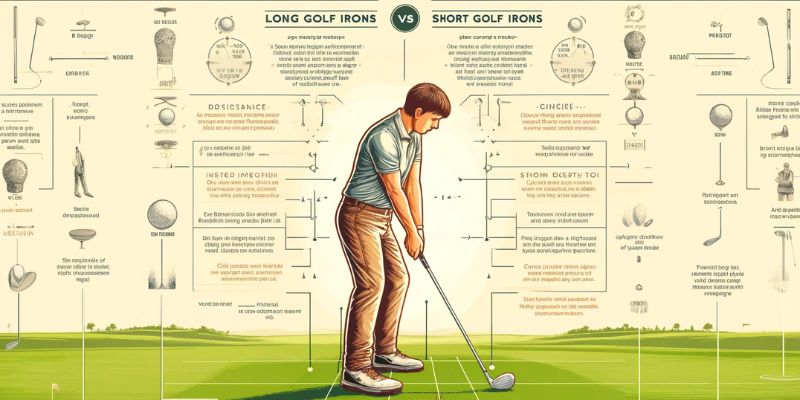
Comparing Techniques: Long Irons vs. Short Irons
Mastering both long and short irons requires understanding their unique swing dynamics and how adjustments in stance, swing path, and follow-through can optimize their use on the course. Here’s how you can adapt your techniques for each type of iron to improve your overall performance.
Long Irons: Techniques and Tips
Stance and Setup:
- Wider Stance: For long irons, adopt a slightly wider stance than usual. This provides a stable base and helps accommodate the longer shaft and lower loft of the iron.
- Ball Position: Position the ball just forward of center in your stance, closer to the lead foot. This helps promote a cleaner contact with a slight downward strike, which is necessary due to the low loft of long irons.
Swing Path and Execution:
- Takeaway and Backswing: Begin with a smooth, controlled takeaway. Keep your backswing full but controlled, ensuring that you maintain a good rhythm and balance.
- Downswing: Initiate the downswing with a slight shift of your weight forward, maintaining the spine angle and allowing the arms to drop into a good ‘slot’ position. This helps create the needed angle of attack and promotes a penetrating ball flight.
- Swing Speed: Long irons require a moderately fast swing speed to generate the necessary power and distance, but it’s crucial to keep the speed controlled to avoid sacrificing accuracy.
Follow-through:
- Complete Follow-through: Ensure a full follow-through with your chest facing the target at the finish. This helps ensure that you are transferring maximum power through the ball, maintaining both speed and direction.
Short Irons: Techniques and Tips
Stance and Setup:
- Narrower Stance: Use a slightly narrower stance than with long irons, which helps increase the verticality of the swing, beneficial for creating the high loft of short iron shots.
- Ball Position: Keep the ball centrally positioned or slightly forward in your stance to facilitate a steep angle of attack, crucial for generating high spin and control.
Swing Path and Execution:
- Controlled Backswing: With short irons, the focus should be on control rather than power. A shorter, more controlled backswing helps maintain accuracy.
- Downswing: Keep the downswing smooth and controlled, focusing on maintaining a good posture and balance. The key is to strike the ball cleanly, using the club’s loft to naturally lift the ball and achieve the desired trajectory.
- Swing Speed: A slower, more controlled swing speed is recommended. This emphasizes precision over power and helps in managing the spin and direction of the shot.
Follow-through:
- Decisive Finish: Ensure a decisive, high finish with the club head pointing upwards. This helps achieve the high trajectory and controlled landing on the green typical of effective short iron play.
While both long and short irons serve distinct purposes in golf, understanding and adapting your technique to each can significantly enhance your game. For long irons, the emphasis should be on stability, power, and penetrating ball flight. In contrast, short irons require precision, control, and a focus on accuracy. Practicing these specialized techniques can lead to better scoring and a more enjoyable golfing experience.
Common Challenges and Solutions: Long Irons vs. Short Irons
Golfers often encounter specific challenges when using long and short irons, given their distinct design and intended use. Understanding these challenges and applying targeted solutions and practice drills can significantly improve proficiency and confidence with these clubs.
Long Irons: Challenges and Solutions
Challenge: Getting Sufficient Lift
- Solution: Focus on the ball position and stance. Ensure the ball is positioned slightly forward in your stance to help achieve a cleaner, upward strike. Additionally, work on maintaining a slight tilt in your spine away from the target to promote a higher launch.
- Drill: Practice hitting long irons with a tee. Start by teeing the ball slightly higher than usual to encourage an upward strike angle. Gradually lower the tee as you gain confidence until you can achieve the same lift from the ground.
Challenge: Maintaining Consistency and Accuracy
- Solution: Develop a smoother swing tempo. Long irons require a balanced and rhythmic swing rather than sheer speed. Focus on syncing your body movements and maintaining a consistent pace throughout your swing.
- Drill: Use the “3:1 tempo drill” where you count to three during your backswing and one during your downswing. This helps in establishing a consistent swing rhythm, crucial for hitting long irons effectively.
Short Irons: Challenges and Solutions
Challenge: Controlling Spin
- Solution: Master the grip and clubface control. Over-spinning often results from overly strong grips or aggressive wrist action. Practice moderating your grip pressure and maintaining a stable wrist position through impact.
- Drill: Practice hitting shots with a quarter or half swing using short irons, focusing on keeping the wrist firm through impact to control spin rates.
Challenge: Over-Hitting the Target
- Solution: Work on club selection and swing control. Golfers often use too much force with short irons, which can lead to overshooting the green. Learn to choose the right club for the distance and practice using a controlled, measured swing.
- Drill: Set up targets at varying distances and practice using different short irons to reach these targets with a focus on controlled, 75% power swings. This helps in developing a better feel for each club and the required swing strength.
General Practice Tips for Both Types of Irons
- Visualization and Mental Preparation: Before each shot, visualize the trajectory and outcome you want. This mental mapping can help align your physical execution with your strategic intentions.
- Feedback-Oriented Practice: Use technology like launch monitors or high-speed cameras during practice sessions to get immediate feedback on each shot’s launch angle, spin rate, and direction. This data can be invaluable in making small adjustments for significant improvements.
Each type of iron presents unique challenges, but with the right techniques and dedicated practice, these challenges can be turned into strengths. Whether struggling with lift in long irons or precision with short irons, focus on fundamentals, incorporate effective drills into your practice routine, and always seek feedback to guide your improvements. Through persistent effort and smart practice, mastering both long and short irons is not just achievable but also rewarding, leading to better performance on the course.
Equipment Considerations: Choosing the Right Irons
Selecting the right golf irons is crucial for optimizing performance and enjoyment on the course. Understanding how to choose the best long and short irons based on personal attributes and course conditions, as well as staying informed about the latest technological advancements, can significantly impact a golfer’s game.
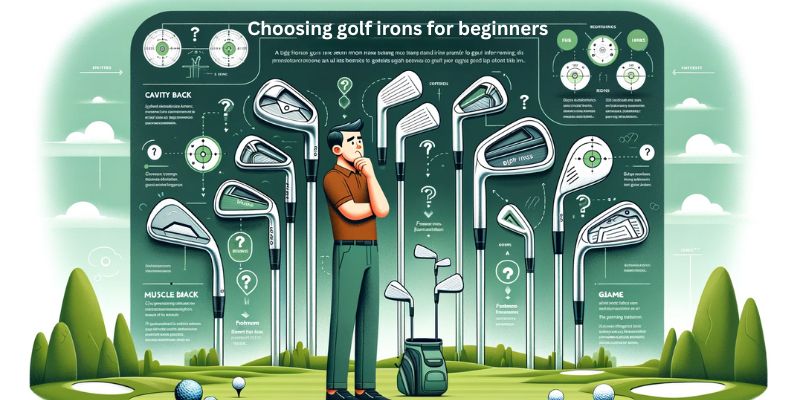
Choosing the Right Irons
1. Assessing Skill Level:
- Beginners: Should look for irons that offer maximum forgiveness and a larger sweet spot. Clubs with perimeter weighting and a wide sole can help reduce the impact of off-center hits.
- Intermediate Players: Might benefit from irons that offer a balance between forgiveness and control, allowing for more precise shot shaping while still providing some room for error.
- Advanced Players: Often prefer irons that prioritize control and feedback, such as forged irons with a smaller head size and less offset.
2. Considering Swing Speed:
- Low Swing Speed: Golfers with slower swing speeds should consider irons with lighter shafts and lower kick points to help launch the ball higher and farther.
- High Swing Speed: Players with faster swing speeds may require stiffer shafts that offer more control and stability during the swing.
3. Evaluating Course Conditions:
- Tight, Narrow Fairways: Irons with a higher degree of accuracy and control can help navigate courses with challenging layouts.
- Long Courses: On longer courses, having long irons or hybrid clubs that maximize distance can be beneficial.
Technology and Innovation in Irons
1. Multi-Material Construction:
- Newer irons often feature a blend of different materials. For example, a tungsten weighting system can optimize mass distribution for improved launch conditions and forgiveness.
2. CoG (Center of Gravity) Adjustments:
- Advances in CoG placement have allowed for lower CoG in long irons, promoting easier launch, and higher CoG in short irons, allowing for more controlled, penetrating flights.
3. Face Technology:
- The development of flexible face technologies, like those seen in some modern irons, helps to increase the sweet spot’s size and enhances ball speed across the face, beneficial for both long and short irons.
4. Shaft Innovations:
- Graphite and multi-material shafts are increasingly popular for their ability to reduce weight and increase shaft flex, helping players with moderate swing speeds achieve better distance and accuracy.
5. Custom Fit Options:
- More than ever, golfers can have irons custom-fitted to their specific needs. Factors like lie angle, shaft length, and grip size can be tailored to suit individual preferences and physical requirements.
Choosing the right golf irons involves a careful consideration of one’s skill level, swing speed, and typical course conditions. With the continuous evolution of golf technology, staying updated on the latest innovations can provide a competitive edge. Players are encouraged to take advantage of custom fitting services to ensure their irons are perfectly suited to their game, enhancing both performance and enjoyment on the course. Whether upgrading to a new set or fine-tuning existing clubs, the right equipment is a vital component of golfing success.
Practical Applications and Drills for Long and Short Irons
Improving your golf game with both long and short irons requires targeted practice routines that focus on the unique challenges and opportunities each type of iron presents. Here are some practical tips and drills to help enhance your proficiency with these crucial clubs.
Practical Applications for Long and Short Irons
- Incorporate Both in Practice Sessions:
- Balanced Practice: Allocate equal practice time to both long and short irons during a session. Start with short irons to establish rhythm and confidence before moving to the more challenging long irons.
- Game-Like Scenarios: Set up practice shots that mimic common on-course situations for each type of iron. For long irons, practice from fairway and rough conditions to simulate long approach shots. For short irons, focus on approach shots from 100 yards and in, emphasizing accuracy and control.
- Track Progress:
- Use technology like launch monitors to track improvements in accuracy, distance, and consistency for shots with both iron types. This data will help identify strengths and areas for improvement.
Drills for Long Irons
- The Staggered Stance Drill:
- Setup: Place a ball in your normal stance and then another one a foot behind and on an outside line. This setup forces you to reach a little further on your swing, helping to extend your follow-through.
- Objective: Focus on hitting the ball solidly with an extended follow-through. This drill helps improve contact and encourages a better transfer of energy, which is crucial for long irons.
- The Low Shot Drill:
- Setup: Use a tee to practice hitting low shots with your long irons. Focus on keeping the follow-through short and the hands ahead of the club at impact.
- Objective: This drill helps you control trajectory, which is beneficial in windy conditions and promotes better ball striking, a critical skill for using long irons effectively.
Drills for Short Irons
- The Target Accuracy Drill:
- Setup: Place targets at varying distances between 50 to 150 yards. Use different short irons to reach each target, focusing on control and accuracy rather than power.
- Objective: This drill improves your ability to judge distance and enhances precision, which is essential for scoring with short irons.
- The High Shot Drill:
- Setup: Practice hitting high shots by placing the ball slightly forward in your stance and focusing on a fuller follow-through.
- Objective: This drill encourages a higher ball flight, which is advantageous for stopping the ball quickly on the green. It helps refine your swing to utilize the loft of short irons effectively.
Regular practice with both long and short irons using these specific drills will help golfers of all skill levels enhance their proficiency. By focusing on the unique aspects of each iron type and regularly incorporating them into practice routines, golfers can develop a more comprehensive skill set that translates into better performance on the course. Remember, consistency in practice is key to seeing improvement in actual play.
Conclusion: The Strategic Importance of Mastering Long and Short Irons
Mastering both long and short irons is essential for any golfer aiming to elevate their game. Each type of iron serves a distinct role in a golfer’s bag, offering unique benefits that, when utilized effectively, can significantly enhance performance across all aspects of the game.
Key Points Recap:
- Long Irons: These irons are invaluable for covering greater distances and achieving precision on longer shots from the fairway or rough. Mastering long irons can give golfers the confidence to tackle challenging long approaches and navigate tough course layouts, especially on par-5s or long par-4s. The ability to control trajectory and maintain stability in windy conditions is a crucial advantage provided by proficient use of long irons.
- Short Irons: Short irons are critical for precision and control around the greens. These clubs are designed for scoring, allowing golfers to execute accurate approach shots, manage pin placements effectively, and optimize play on shorter holes. The higher loft and shorter shafts of short irons aid in achieving a soft landing on the green, making them essential for reducing scores through improved greenside play.
Encouragement for Continuous Improvement:
Every golfer’s journey is unique, with distinct strengths and areas for improvement. As you reflect on your own experiences with long and short irons, consider the following:
- Evaluate Your Current Skills: Assess how comfortable and effective you are with each type of iron. Are there specific distances or shots that consistently pose challenges? Identifying these can help pinpoint where focused practice is needed.
- Seek Opportunities to Practice: Utilize the drills and techniques outlined to enhance your capabilities with both long and short irons. Regular practice, whether on the range or through playing rounds, is crucial. Consider integrating both types of irons into your practice routines to develop a versatile approach to your game.
- Embrace Customized Learning: If possible, work with a golf coach or take lessons specifically aimed at improving iron play. Customized advice can accelerate your improvement and help refine your technique in ways self-guided practice might not achieve.
- Leverage Technology: Modern advancements in golf equipment, especially irons, can also aid in overcoming some of the traditional challenges associated with long and short iron play. Don’t hesitate to explore new technologies that could complement your evolving skills.
Mastering the varied uses of long and short irons not only enhances your ability to adapt to different golfing scenarios but also increases your overall enjoyment and success in the sport. As you continue to practice and improve, remain patient and persistent. With time and dedication, the mastery of these crucial clubs will undoubtedly lead to lower scores and more rewarding rounds.