
by Mark Preston | May 7, 2024 | Golf Equipment & Products - Reviews, Articles & Guides
Mastering the art of putting is crucial for any golfer looking to improve their score and gain a competitive edge.
This detailed guide will cover effective green reading, proper golf putter stance and posture, and essential practice drills to refine your putting skills.
Reading Greens Effectively
The ability to read greens effectively is a fundamental skill in the art of putting.
It involves understanding the contours and speed of the green, which can dramatically influence the path and pace of your putts.
Analyze from Different Angles
Always walk around the putt and look at it from multiple perspectives.
Viewing your putt from the low side of the green can offer insights into the slope and help you gauge how much the ball will break.
Consider the Grain and Weather Conditions
The grain of the grass can affect how and where your putt breaks. In general, grass tends to grow towards the setting sun or the lowest point of the green.
Also, moisture levels due to weather conditions can slow down or speed up the putt, so adjust your power accordingly.
Use Visual Markers
Pick a spot on your line a few inches in front of the ball to aim at, rather than aiming directly at the hole.
This can help in maintaining a consistent direction in your putting stroke, especially on breaking putts.
Putter Stance and Posture
The correct stance and posture can significantly impact your ability to master the art of putting.
Consistency in your setup allows for more controlled and precise putts.
Stance Width
Your feet should be approximately shoulder-width apart. This stance provides a stable base and helps balance your weight evenly through the stroke.
Ball Position
Position the ball slightly forward in your stance, close to your front foot.
This placement helps ensure that your putter strikes the ball with an ascending blow, which is critical for a smooth roll.
Posture
Bend at the hips, not the waist, and keep your back straight but relaxed.
Your eyes should be directly over the ball, and your arms should hang down naturally, allowing for a free and easy pendulum swing.
Practice Drills for Better Putting
Consistent practice is key to mastering the art of putting. Here are a few drills that focus on improving accuracy and consistency:
The Gate Drill
Place two clubs or alignment sticks on the ground forming a gate just wider than your putter head.
Practice putting through the gate to improve your stroke path and accuracy.
This drill helps ensure that your putter is moving straight back and through on the target line.
The Distance Control Drill
Lay out clubs or towels at varying distances (e.g., 10, 20, 30 feet) from your putting start point.
Practice putting to each marker, focusing on controlling the power of your stroke to stop the ball at each specific distance.
This drill enhances your feel and adaptability to different greens.
The Clock Drill
Place balls around a hole at three, six, and nine feet in a clock pattern.
Practice putting from each distance, aiming to make a complete circle around the hole without missing.
This enhances your confidence and skill in making short to medium-range putts under pressure.
Mastering the art of putting is about developing a blend of technical skills, mental toughness, and consistent practice.
By focusing on these essential aspects, you can improve your putting accuracy and reliability, ultimately lowering your scores and enhancing your enjoyment of the game.
How often should I practice putting to see improvement?
Regular practice is crucial. Aim for at least three sessions per week, focusing on different aspects of putting each time to develop a well-rounded skill set.
What type of putter is best for beginners?
Beginners may benefit from using a mallet putter due to its larger sweet spot and higher moment of inertia, which helps with stability and forgiveness on mis-hits.
How can I maintain concentration while putting under pressure?
Develop a consistent pre-putt routine that includes deep breathing and visualization techniques. This can help maintain focus and calmness during competitive situations.

by Mark Preston | May 7, 2024 | Golf Equipment & Products - Reviews, Articles & Guides
Choosing the right golf putter involves understanding the different types available, how each can complement your style of play, and the importance of grip and length.
Golf putters are often the most personal and varied pieces of equipment in any golfer’s bag, significantly impacting your game on the green.
This guide will help you navigate these choices, and help to master the art of putting to find your ideal golf putter.
Types of Putters Explained
Understanding the various types of golf putters is the first step in selecting one that will work best for you.
Blade Putters
Blade putters are the classic design, favored for their simple, flat, and narrow heads.
Ideal for players with a straight putting stroke, blade putters offer great feedback and control, making them a popular choice among experienced golfers and those who prefer a traditional feel.
Mallet Putters
Mallet putters have larger heads and a more modern design, which provides a higher moment of inertia (MOI), making them more stable on off-center hits.
This type is suitable for players with an arc in their stroke or those who struggle with alignment and consistency.
Peripheral-Weighted Putters
Combining elements of both blade and mallet putters, peripheral-weighted putters feature weight distributed around the perimeter of the head, enhancing forgiveness and stability without the bulk of a full mallet design.
How to Select the Perfect Putter
Selecting the perfect golf putter goes beyond just choosing a type. It involves several key factors:
Consider Your Stroke Style
Identify whether your stroke is straight or has an arc.
Blade putters are generally better for a straight-through stroke, whereas mallets and peripheral-weighted designs suit an arced stroke.
Experiment with Different Weights
The weight of the putter can significantly affect your control and feel.
A heavier putter might be better for faster greens or for those who need more stability, while a lighter putter can be ideal for slower greens and those who prefer a finer touch.
Look for Alignment Aids
Many modern putters include visual aids on the top of the clubhead to help golfers align their putts more accurately.
Depending on your visual preference, these can be a simple line or more elaborate designs.
The Role of Grip and Length
The grip and length of your golf putter can drastically affect your comfort and accuracy, making it critical to get these aspects right.
Choosing the Right Grip
The thickness and texture of the putter grip can impact your stroke.
Thicker grips can help reduce wrist action, potentially leading to more consistent strokes, while thinner grips allow for more finesse and wrist play.
Correct Putter Length
The right length helps maintain a comfortable stance and natural posture, reducing strain and improving accuracy.
Most putters range from 32 to 36 inches, but getting fitted can ensure your putter is tailored to your height and stroke style.
Selecting golf putters involves careful consideration of your personal preferences, playing style, and physical characteristics.
Armed with the right information and perhaps a bit of trial and error, you can find the perfect golf putter to enhance your game, making it a thoughtful gift for yourself or any golfer looking to improve their performance on the greens.
How often should I replace my golf putter?
Unlike other golf clubs that may wear out more quickly due to frequent impacts, a golf putter can last many years if well-maintained. Consider replacing your putter only if your playing style changes or if newer technology significantly enhances the features that can improve your game.
Does the brand of the golf putter matter?
While the brand can be an indicator of quality and innovation, choosing the right golf putter for any golfer needs to be the one that feels right for their stroke and comfort. It’s worth trying a variety of brands to see which one suits your game the best.
How do I know if my putter is the right fit for me?
The best way to ensure a good fit is to get a professional fitting where your stroke style, posture, and height are taken into consideration to customize the putter’s length, lie angle, and grip size.

by Mark Preston | May 3, 2024 | Golf Equipment & Products - Reviews, Articles & Guides
Putters are more than just tools; they are the artists’ brushes of golf, each stroke determining success on the greens.
The right putter not only complements your putting style but also enhances your control and consistency, turning near-misses into confident strokes.
In this guide, we’ll explore the key features of top-performing putters, how to match a putter to your personal style, and essential maintenance tips to keep your putter in championship condition.
Key Features in Top Performing Putters
When it comes to best putters, certain features stand out that can significantly affect performance:
Balance and Feel
A putter’s balance can greatly influence its feel during a stroke, and this feel can be either face-balanced or toe-balanced.
Face-balanced putters are often recommended for players with a straight putting stroke, as they tend to stay more square to the putting line. Toe-balanced putters, on the other hand, are suited for players with an arc in their stroke, offering more control with a swinging motion.
Head Design
The design of the putter head plays a crucial role in how the putter performs.
Blade putters, with their thin and flat design, are typically favored by players who enjoy a more tactile feel and greater feedback.
Mallet putters offer more forgiveness on mis-hits and are preferred by players who prioritize stability over feel.
Materials and Construction
Modern putters are constructed from a variety of materials. Stainless steel and aluminum are common for their durability and feel, while newer materials like carbon fiber are used to reduce weight and adjust the center of gravity.
The choice of material can affect the weight, balance, and overall feel of the putter, impacting how well it performs in different conditions.
Aligning Your Putting Style with the Right Putter
Choosing the best putter is deeply personal and largely dependent on your individual putting style.
Analyze Your Stroke
Understanding whether you have a straight or arcing stroke will guide you towards a putter type that complements your natural tendencies.
Tools like stroke analyzers can provide insights into your stroke dynamics and help you make a more informed choice.
Length and Lie
The length of the putter should allow you to maintain a comfortable and natural posture, reducing strain on your back and improving accuracy.
Similarly, the lie angle of the putter should match your stance to ensure the putter head is flat against the ground at impact.
Grip Size and Shape
The grip can significantly affect your touch and control.
Larger grips can help reduce wrist action for players who struggle with consistency, while traditional thinner grips offer more wrist flexibility for experienced players who prefer finesse over stability.
Maintenance Tips for Your Putter
Keeping your best putter in excellent condition is essential for consistent performance:
Regular Cleaning
Clean your putter after every round to remove dirt and moisture.
Use a soft cloth and mild soap solution to wipe the head and shaft, and dry it thoroughly to prevent rust and damage.
Storage
Store your putter in a dry, cool place.
Avoid leaving it in extreme temperatures, such as a hot car trunk, which can damage the grip and adhesive materials used in the putter’s construction.
Check for Wear
Regularly inspect your putter for signs of wear, especially on the grip and the face.
Replacing worn grips and polishing the head can restore the original feel and improve performance.
Selecting the best putters requires consideration of many personal factors, from physical compatibility to playing style. By understanding these aspects and maintaining your equipment, you can turn putting into a true art form, with each stroke a masterful expression of skill and precision, making any of these putters a perfect gift for the avid golfer in your life.What makes a putter suitable for a beginner?
What makes a putter suitable for a beginner?
For beginners, the best putters are typically those with larger, more forgiving mallet heads and softer grips that help with stability and confidence in each stroke.
How often should you replace your putter?
There is no set rule for replacing a putter as long as it remains in good condition and continues to perform as expected. However, if noticeable wear affects performance, or if your playing style changes, it might be time to consider a new putter.
Can the type of putter really change your game?
Absolutely. The right putter can make a significant difference in your game by improving accuracy, consistency, and confidence on the green, especially in pressure situations.

by Mark Preston | May 3, 2024 | Golf Equipment & Products - Reviews, Articles & Guides
Golf practice nets are an indispensable tool for golfers looking to refine their skills without frequent trips to the driving range.
These versatile accessories allow players to practice safely in any suitable space, ensuring more consistent training sessions.
This guide will cover why golf nets are essential for golfers, how to choose the right size and type, and tips for setting up an effective practice area at home.
Why a Practice Net is a Must-Have for Golfers
Golf nets serve multiple purposes that make them invaluable to golfers of all levels:
Safety and Convenience
The primary benefit of golf nets is the ability to practice safely in various settings.
Whether in your backyard, garage, or even indoors, golf nets capture balls as you practice your swing, preventing damage to property and ensuring the safety of bystanders.
Frequent Practice
With a golf net, you can practice at any time, regardless of weather conditions or availability of local facilities.
This accessibility is crucial for busy individuals who may not have the time to visit a golf course regularly.
Cost-Effective
Investing in a golf net can save money in the long run by reducing the need for range fees and travel expenses associated with practicing at distant facilities.
It’s a one-time purchase that pays dividends as you use it continuously to improve your game.
Choosing the Right Size and Type of Golf Net
Selecting the appropriate golf net involves understanding your space requirements and the specific types of practice you intend to pursue:
Size Matters
Ensure the net you choose is suitable for the space you have available.
Measure the area where you plan to set up the net and compare it with the dimensions of various models.
Consider future changes in your practice location that might require a more portable or adjustable design.
Types of Golf Nets
Driving Nets:
These are designed for full swings and are usually larger to safely catch high-speed balls.
Chipping Nets:
Smaller and designed for short-range chip shots, these nets are perfect for honing your short game.
Multi-purpose Nets:
Offer flexibility to practice different types of shots, from driving to chipping, making them ideal for golfers looking for a versatile training tool.
Material and Durability
Choose a net made from high-quality, durable materials capable of withstanding the impact of repeated drives.
Nylon nets are common due to their strong, weather-resistant properties.
Setting Up Your Practice Area with a Golf Net
Creating an effective practice area at home can significantly impact the quality of your training sessions:
Selecting the Right Location
Choose a location that is safe, free from obstructions, and has enough space to comfortably swing a club.
Basements, garages, and backyards are popular choices among home golfers.
Installation
Follow the manufacturer’s instructions carefully when setting up your golf net to ensure it is secure and stable.
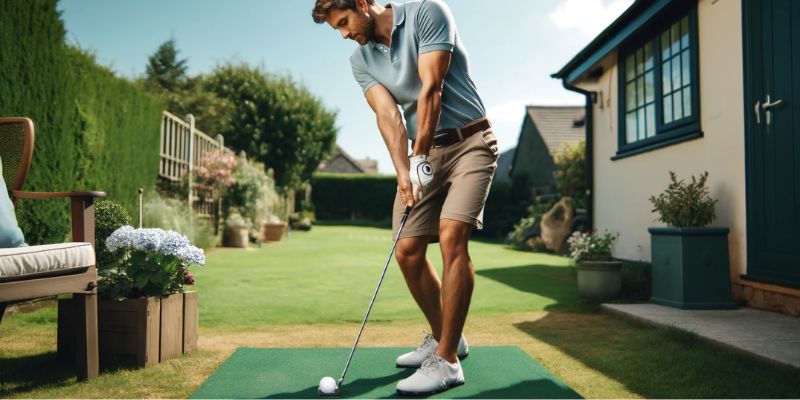
Consider additional protective measures like using a hitting mat to protect your lawn or flooring.
Enhance Your Practice
Incorporate other training aids like turf hitting mats, alignment tools, simulators and swing analyzers to maximize the effectiveness of your practice sessions.
This setup not only simulates a real golfing environment but also helps in tracking your progress.
Golf practice nets are a must-have accessory for any golfer serious about improving their game.
They offer the convenience, safety, and flexibility needed to practice effectively at home, making them a wise investment for both new and experienced players.
How often should I replace my golf net?
The lifespan of a golf net depends on its usage and material quality. High-quality nets can last several years with regular use. Inspect your net periodically for wear and tear, and replace it if you notice significant damage.
Can golf nets really improve my golf game?
Yes, golf nets allow for consistent practice and can help improve various aspects of your game, including driving, chipping, and accuracy. Regular use of a golf net enables you to refine your swing mechanics and build muscle memory.
Are there specific golf nets recommended for beginners?
Beginners should look for larger, more forgiving nets that can catch off-target shots easily. Multi-purpose nets are particularly beneficial for beginners as they allow for practicing a wide range of shots.
by Mark Preston | May 3, 2024 | Golf Equipment & Products - Reviews, Articles & Guides